How to Build an Investor Target List
The most successful fundraises start with a well-researched target list. Here's how to build yours — which investors to target, how to find them, and how to prioritize.
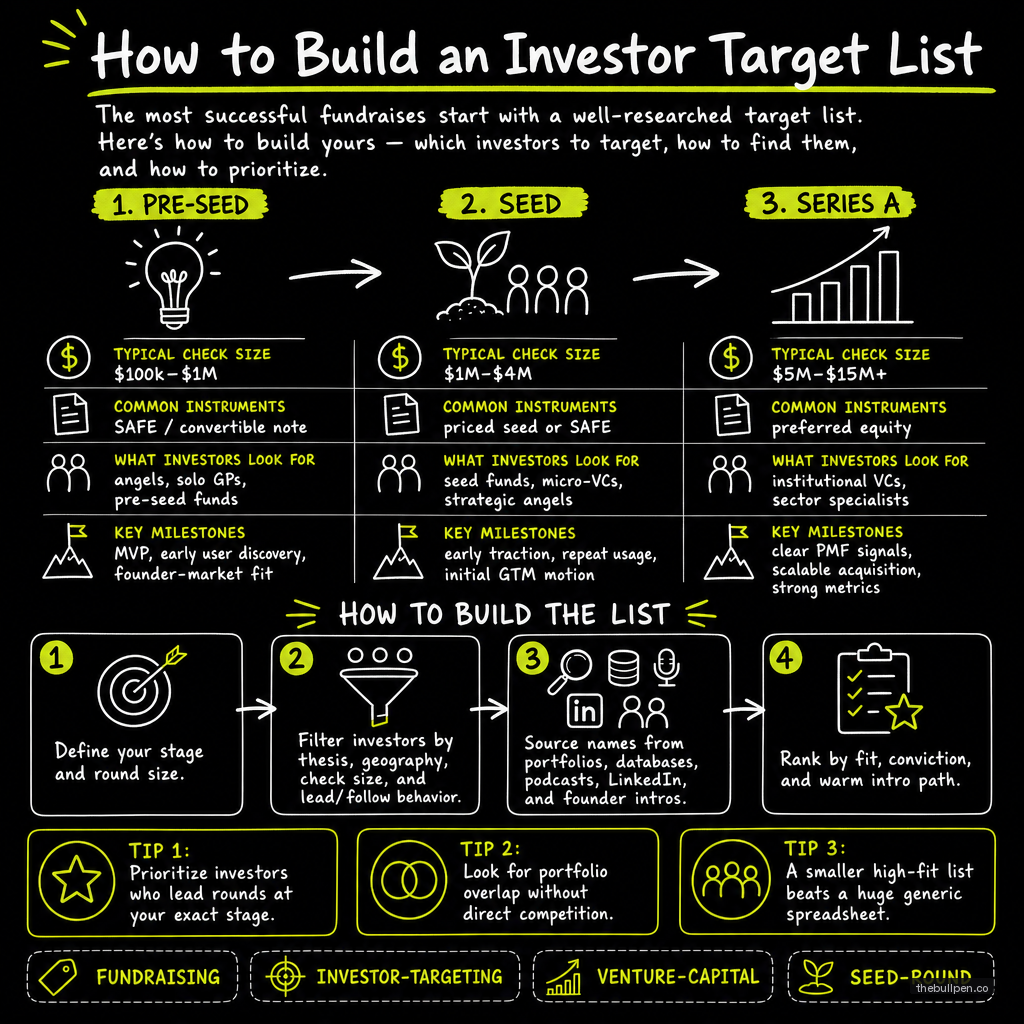
The most common fundraising mistake isn't a bad pitch. It's pitching the wrong investors.
Founders blast their deck to 200 VCs, get five meetings, zero term sheets, and conclude the market isn't interested. The real problem: 195 of those investors were never going to fund a startup at their stage, in their space, with their geography. The outreach noise drowned out the signal.
A well-researched target list of 30-50 investors who are genuinely likely to fund your startup will outperform a spray-and-pray list of 200 every time. The work of building that list is the highest-leverage activity in fundraising.
Related: The Startup Fundraising Playbook: From Pre-Seed to Series A
The Framework
Build your target list across three dimensions: stage fit, sector fit, and relationship access.
Stage fit. Does this investor write checks at your round size? A firm that only does Series B won't write a seed check. An angel who writes $25K checks won't lead your $3M round. Filter ruthlessly by stage. Crunchbase, PitchBook, and the investor's own website tell you their typical check size and round stage.
Sector fit. Does this investor understand your space? A fintech-focused VC will write a fintech check faster than a generalist firm, because they already know the market, the competitors, and the regulatory landscape. Investors also prefer backing companies they can help through their network. A healthtech fund's portfolio companies can become your first customers.
Relationship access. Can you get a warm introduction? This is the most important filter. A cold email to a partner has a near-zero conversion rate. A warm introduction from a founder they've backed, a lawyer they work with, or a mutual connection converts at 30-50%.
| Filter | Good Signal | Bad Signal |
|---|---|---|
| Stage fit | Check size matches your target round | "They've never done a deal at our stage" |
| Sector fit | 3+ investments in adjacent companies | "They invest in everything" |
| Access | 2nd-degree connection with context | No connection, cold email required |
Where to Find Them
Crunchbase and PitchBook. Search for investors who have funded companies in your space at your stage. Look at the lead investors in those rounds. Those are your targets.
LinkedIn. Follow investors in your space. Engage with their content. Comment thoughtfully on their posts. Join the same industry groups. By the time you reach out for an intro, they should recognize your name.
Your network. Ask every founder you know who their investors are. Ask which ones were helpful and which were absent. Ask for introductions. Founders who've been backed by an investor are the strongest reference for whether that investor is worth your time.
Portfolio analysis. Look at the portfolios of target firms. If they've backed three companies in adjacent spaces, they're likely to understand your market. If their portfolio looks random, your pitch will require more education.
The 50-30-20 Rule
Aim for a target list of 50 investors across three tiers.
Tier 1 (strongest fit): 10 investors. These are the ones where every signal aligns — stage, sector, relationship, and portfolio fit. These are your first targets. Prioritize warm introductions. Spend the most time tailoring your approach.
Tier 2 (good fit): 15 investors. Stage and sector fit are strong, but you need a relationship-building strategy. Attend their events. Get introduced through a mutual connection. Build awareness before you pitch.
Tier 3 (worth a shot): 25 investors. The fit is reasonable but not perfect. These are your backup targets. Cold outreach is acceptable here, but spend minimal time on each.
| Tier | Count | Strategy | Target Response Rate |
|---|---|---|---|
| 1 | 10 | Warm intro, personalized | 50%+ |
| 2 | 15 | Relationship building first | 20-30% |
| 3 | 25 | Targeted cold outreach | 5-10% |
Related: Pre-Seed Fundraising Playbook: From Zero to $1M
How to Use the List
Don't pitch all 50 at once. Start with Tier 1, learn from the conversations, refine your story, then expand to Tier 2.
The first 5-10 meetings are practice. You'll learn which questions investors ask, which parts of your story are confusing, and which objections keep coming up. After each batch of meetings, update your pitch and your materials.
Track everything. Which investors responded. Which wanted follow-up meetings. Which passed and why. The data from your fundraising process is as valuable as the money itself — it tells you how the market perceives your company.
When you get a term sheet, tell the remaining investors. Nothing creates urgency like knowing someone else is doing diligence. Give them a deadline. A week is standard. If they're interested, they'll move fast. If they're not, you know where you stand.
What Not to Do
Don't pitch partners who don't invest in your space. You're wasting everyone's time. Two minutes of research prevents this.
Don't send a generic email. If you can't customize a paragraph explaining why you're reaching out to this specific investor, you're not ready to pitch.
Don't ignore the "no." If an investor passes with specific feedback, pay attention. They might be wrong, but they might also be telling you something important about your positioning.
Don't give up after Tier 1. Most successful fundraises go through multiple rounds of outreach. The first 10 meetings might yield zero interest. The next 20 might yield two term sheets. Persistence compounds.
Published on the Bullpen Blog. New articles every day at 9 AM UTC.
Get weekly pitch tips
One email a week. Actionable advice for founders.
See how investors will grade your pitch. Try now →