The Pivot That Saved My Startup: 3 Stories
The best companies didn't start as what they became. Here are three founders who recognized when their original idea wasn't working — and made the change that saved everything.
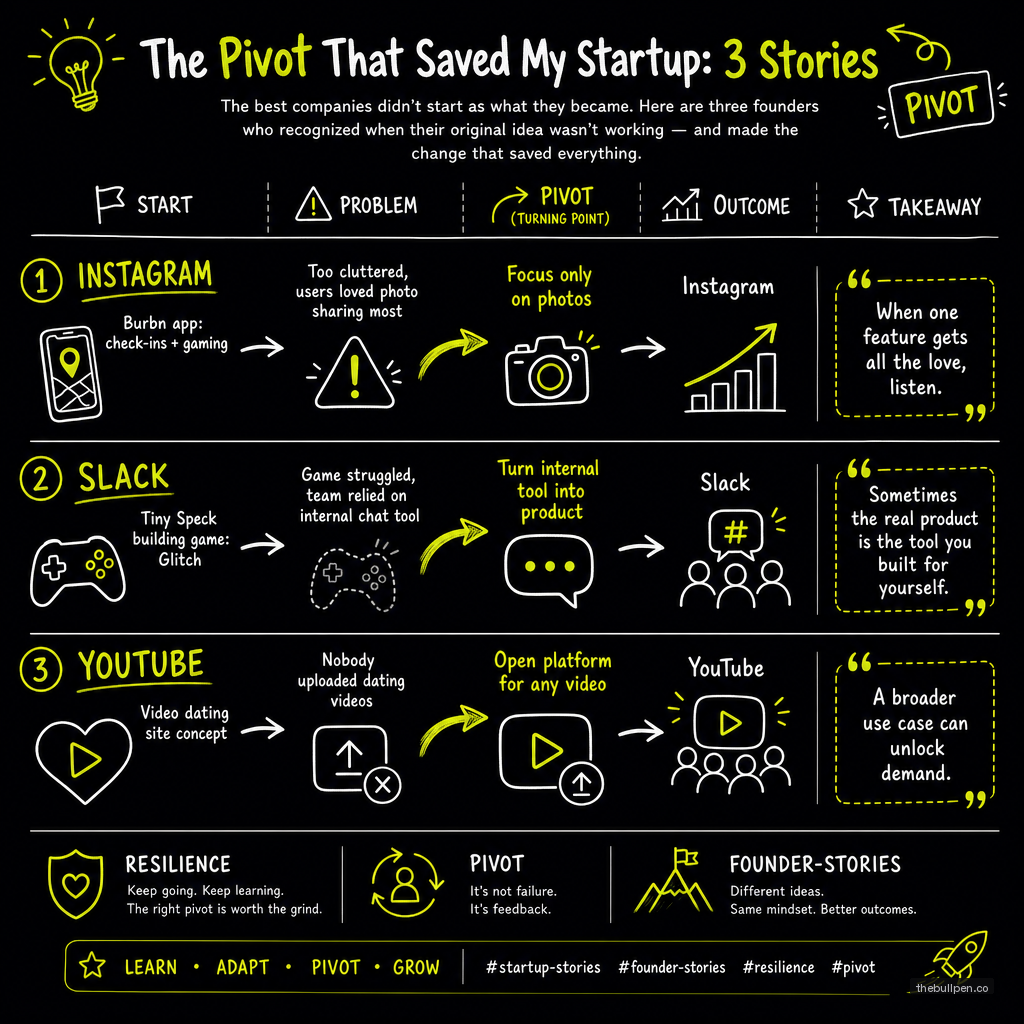
Every startup pivots. The ones that succeed are the ones that recognize it early enough to do something about it.
The word "pivot" has been overused to the point of meaninglessness. It's become a euphemism for "our first idea didn't work" — which is true but doesn't capture the emotional reality. A real pivot is not a strategic adjustment. It's a bet-the-company change of direction that happens when the data is clear that the current path leads to failure.
The founders who make it through are the ones who can separate their ego from their idea. They built something, they tried to sell it, and the market told them no. They listened, changed course, and built something the market actually wanted.
Related: How Real Founders Raised Their First Million: Lessons from the Trenches
Twitter: The Podcast Platform That Became a Social Network
Before Twitter was Twitter, it was Odeo — a podcast discovery platform. The year was 2005. Apple had just added podcasts to iTunes, and the Odeo team realized that a giant had entered their space before they had any traction. The product wasn't growing. The team was demoralized. The company was running out of time.
Evan Williams, one of the co-founders, made a decision. He told the team to spend their time on whatever they wanted — anything that felt interesting. One engineer, Jack Dorsey, had been tinkering with an idea about status updates sent via SMS. The team built a prototype in two weeks.
The rest is history. But the lesson isn't that Twitter was inevitable. It's that the founders were willing to abandon a product they'd been building for a year when the market signal was clear. Odeo wasn't working, and they didn't try to force it. They moved on.
The key insight: the pivot came from someone who was working on a side project within the company. The founders didn't sit down and design Twitter in a strategy session. They created an environment where new ideas could emerge, and they had the courage to bet on one that wasn't the original plan.
Shopify: The Snowboard Shop That Built an E-Commerce Empire
Tobias Lütke was a snowboarder who wanted to sell snowboarding equipment online. He tried using existing e-commerce platforms and found them all terrible. So he built his own.
The snowboard shop never took off. But the software he built to run it — that was interesting. Other merchants started asking if they could use it. Lütke realized he wasn't building a snowboard company. He was building an e-commerce platform.
This is a "product pivot" — the original business was a store, but the real value was the tool used to run it. Lütke's willingness to abandon his original vision (selling snowboards) in favor of the unexpected opportunity (selling the software) created one of the most valuable companies in Canada.
| Pivot Type | Original Idea | What It Became | Signal |
|---|---|---|---|
| Side project | Odeo (podcasts) | Competitor entered market | |
| Product discovery | Snowboard shop | Shopify | Customers wanted the tool |
| Market shift | Burbn (check-ins) | Feature was more popular |
Instagram: The Feature That Became a Company
Kevin Systrom built an app called Burbn. It was a location-based check-in app with photo sharing as one of many features. The app was cluttered and confusing. Users weren't engaging with most of the features — but they were posting photos like crazy.
Systrom and his co-founder Mike Krieger looked at the data and made a radical decision. They stripped out everything except the photo feature, renamed the app Instagram, and launched it as a pure photo-sharing app. It grew to 100,000 users in its first week.
The courage in this pivot is often overlooked. They had an app with users, traction, and investor interest. Most founders in that position would try to improve the existing product — add more features, fix the UX, market harder. Instead, they killed most of their product and bet everything on one feature that was working. That takes more conviction than starting from scratch.
The Common Thread
These three stories share a pattern. The founders paid attention to what their users were actually doing, not what they wanted them to do. They separated the idea from the execution — the original idea was a container for the execution, and when the execution found a better idea, they switched containers.
The lesson for founders: your first idea is probably wrong. The question is how quickly you'll figure out what the right idea is, and whether you'll have the courage to change direction when you find it. The market tells you what it wants. Your job is to listen.
Related: Startup Stories: When Your Company Almost Died (Coming soon — September 30, 2026)
Data references: Twitter/Odeo origin story (Ev Williams, Jack Dorsey — 2005-2006), Toby Lütke (Shopify — snowboard shop to e-commerce platform, 2004-2006), Kevin Systrom (Instagram/Burbn — feature pivot to photo sharing, 2010).
Ready to see how investors would evaluate your current pitch? Upload your deck to Bullpen for a free AI-powered assessment across 7 categories.
Get weekly pitch tips
One email a week. Actionable advice for founders.
How does your founder story score? Find out in 2 minutes. Try now →