Social Media Strategy for B2B Startups
Most B2B startups waste time on social media by posting the wrong content on the wrong platforms. Here's what actually works for pre-revenue and early-stage B2B founders.
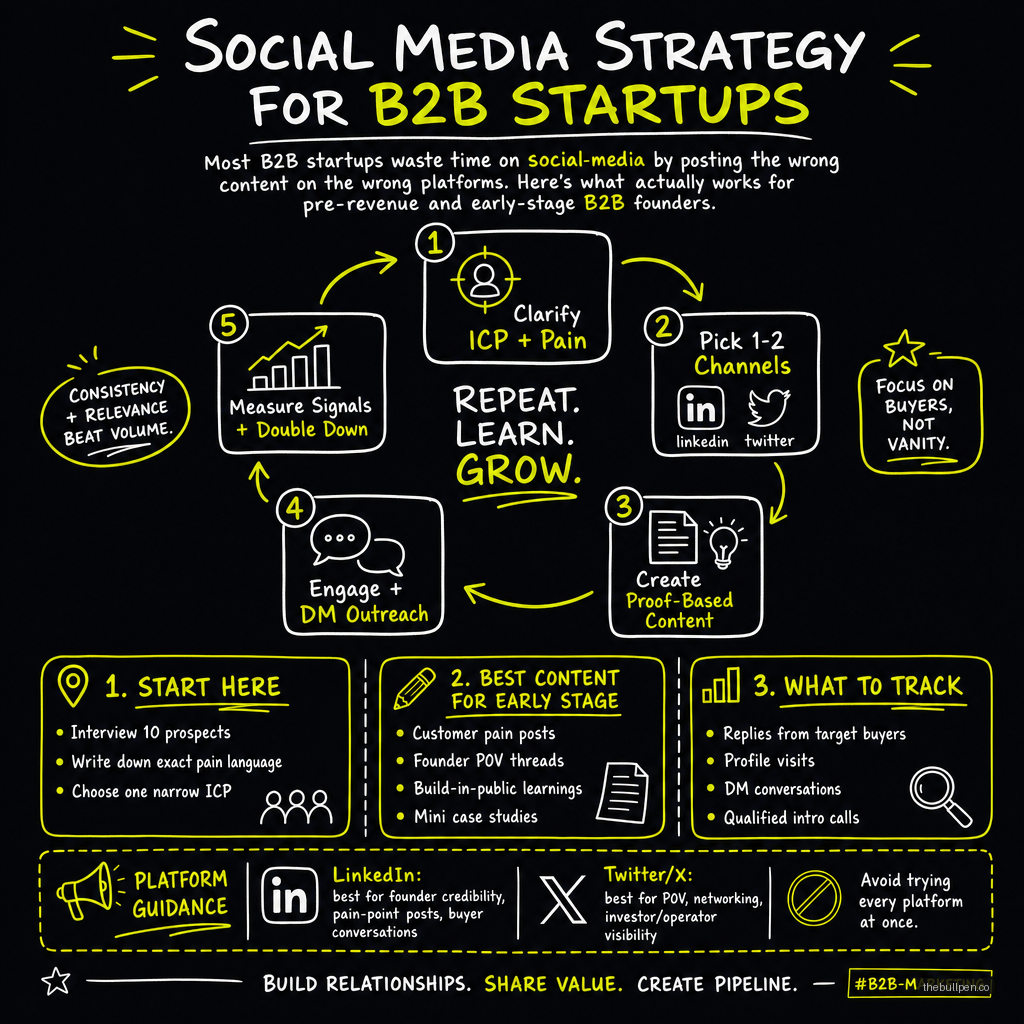
If you're a B2B founder and your social media strategy is "post on LinkedIn three times a week and hope," you're not alone. That's what most founders do. And that's why most founders get nothing from social media.
The problem isn't that social media doesn't work for B2B. It's that the content most startups produce is invisible — generic thought leadership that sounds like everyone else and gets engagement from other founders trying to do the same thing. The audience you need to reach — potential customers, partners, and investors — scrolls past because they've seen the same post a hundred times before.
The B2B startups that get real value from social media follow a different playbook. They choose one platform and dominate it before expanding. They create content only they could write. They build an audience before they need it. And they measure the right things: conversations started, not likes earned.
Related: Content Marketing for Early-Stage Startups
Which Platform to Choose
For B2B startups, the platform decision is easy: LinkedIn first, X/Twitter second, YouTube third. Everything else is a distraction.
LinkedIn is the default because it's where business decision-makers spend their professional attention. The algorithm favors founder-led content over brand pages. The native lead gen features (direct messaging, newsletter subscriptions, event promotion) align naturally with B2B sales cycles. A founder who posts consistently on LinkedIn for six months will build a relevant audience faster than any other channel.
X/Twitter is the secondary platform for B2B founders, particularly those still in pre-product or pre-revenue stages. Twitter's culture rewards hot takes, building in public, and direct engagement with investors and other founders. It's the best platform for building a personal brand before you have a product to sell. Lenny Rachitsky, Julian Shapiro, and Wes Kao all built significant audiences on Twitter before launching their products.
YouTube is the long game. B2B buyers watch videos when evaluating solutions — product demos, tutorials, comparison content. A well-optimized YouTube video can generate leads for years. The cost is production time and the patience to build an audience slowly. The benefit is that YouTube content doubles as SEO content — Google indexes YouTube videos aggressively.
| Platform | Best For | Time to First Result | Content Rhythm |
|---|---|---|---|
| Building a professional audience, lead gen | 2-3 months | 4-6x/week short posts | |
| X/Twitter | Personal brand, investor awareness | 1-2 months if good at threads | 1-2x/day threads + comments |
| YouTube | Long-term SEO, product education | 6-12 months | 1x/week deep content |
The Content That Works
The most effective B2B social content follows a simple formula: specific insights that only you can share, packaged for the platform.
Founder narratives. Posts that tell the honest story of building the company — the mistakes, the metrics, the unexpected customer conversations. These perform best because they're the hardest for anyone else to replicate. A post titled "We spent $50K on Google Ads before realizing our best channel was cold email" is more engaging than "5 Tips for B2B Marketing."
Data from your business. Unique data about how your customers behave, what your cohorts look like, or what you've learned from A/B tests. Original data gets saved, shared, and cited. It builds credibility faster than any opinion piece.
Opinion with edge. B2B thought leadership is flooded with safe, generic advice. The posts that stand out take a position. "The SaaS metrics everyone tracks are wrong" will get more engagement than "Here are some metrics to consider." The risk of being wrong is worth the reward of being noticed.
Threads that teach. On Twitter, a 15-tweet thread that walks through a framework, a case study, or a step-by-step process consistently outperforms individual tweets. Threads get saved, and saves tell the algorithm to show your content to more people.
Related: SEO for Startups: How to Rank Before You Have Domain Authority
The System That Works
The founders who get results from social media don't spend all day on it. They have a system.
Create once, repurpose everywhere. Record a 15-minute Loom video about a topic you know well. Transcribe it → turn it into a blog post → extract 5-7 LinkedIn posts → turn the stats into a Twitter thread → record a 3-minute version for YouTube. One hour of recording produces a week of content across three platforms.
Engage before you post. Spend 15 minutes per day commenting on posts from people in your target audience. Not "great post!" — actual value-add comments that demonstrate expertise. This builds relationships and tells the algorithm your content is relevant to those people.
Measure conversations, not likes. The number of DMs you receive after a post is worth more than a thousand likes. A LinkedIn post that generates five conversations with potential customers is more valuable than one that gets 500 reactions from founders in the same position you are.
Consistency beats virality. One post per day for six months beats five posts that go viral and then silence. The algorithm rewards reliability. Your audience builds trust through repeated exposure. If social media feels like a chore after two weeks, you're trying to do too much per post.
Mistakes That Kill B2B Social
Posting like a corporation. Brand pages talking about company values and product features get close to zero organic reach on LinkedIn. People follow people, not logos. Your personal profile is your primary channel.
No clear CTA. Every post should point to a next step — a newsletter signup, a demo request, a piece of content, a follow request. If someone reads your post and doesn't know what to do next, the post failed.
Comparing to B2C virality. B2B social is a different game. Your audience is smaller and the sales cycle is longer. A post that gets 200 targeted engagements from people who could actually buy your product is better than one that gets 10,000 irrelevant reactions.
Hiring a junior person to run your personal brand. B2B social only works when the founder's voice is authentic. A social media manager posting as you reads like a social media manager posting as you. Your audience can tell. If you're too busy to post, post less, but keep the voice real.
The best B2B social media strategy is simple: pick LinkedIn, post something useful every day, reply to every comment, and track how many conversations it starts. Do that for six months and see where you are.
Published on the Bullpen Blog. New articles every day at 9 AM UTC.
Get weekly pitch tips
One email a week. Actionable advice for founders.
Get a GTM pitch evaluation in 2 minutes. Try now →